Airports
Ground Transportation at JFK: The Complete Arrival Guide
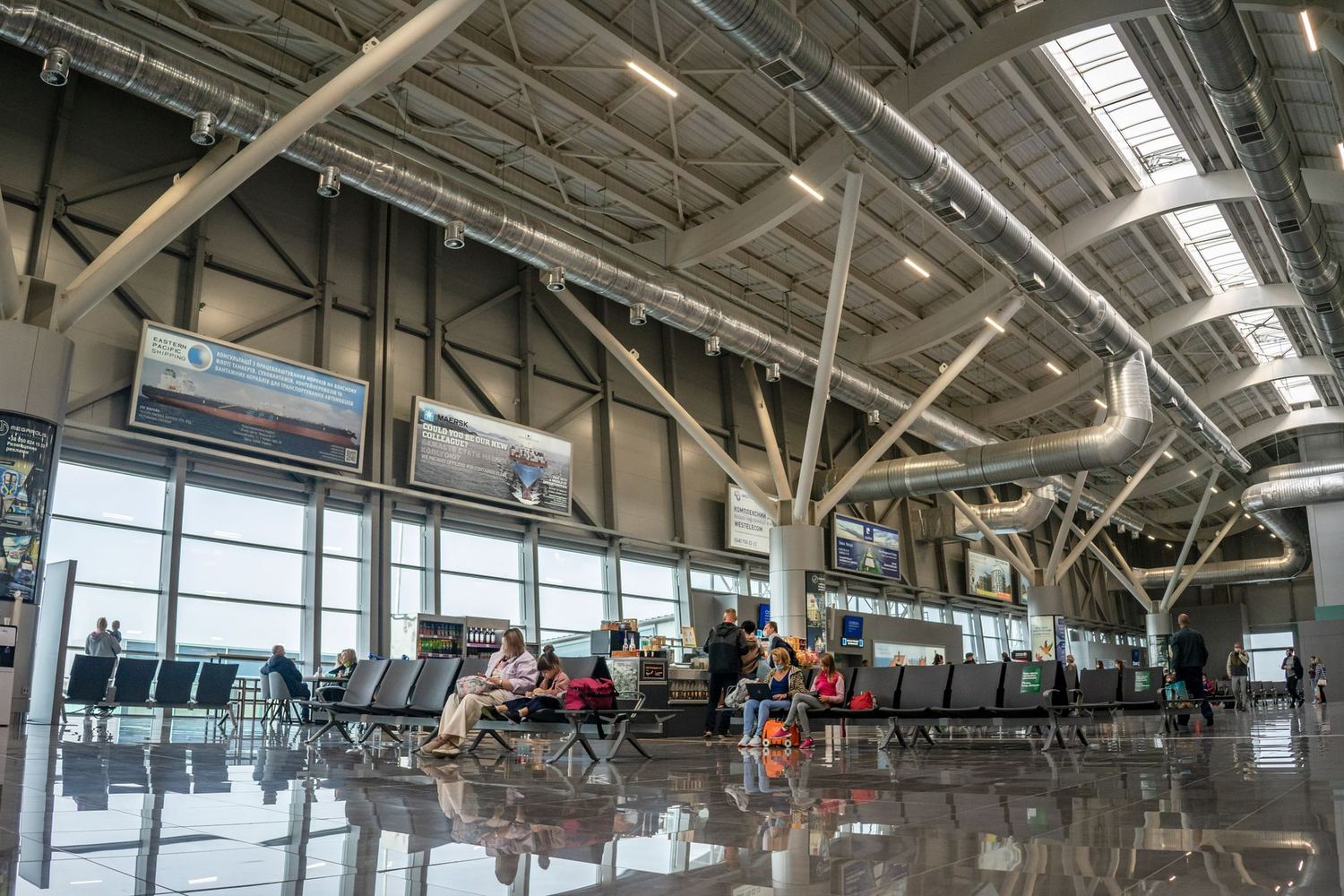
John F. Kennedy International is not one airport. It is a ring of separate terminal buildings around a central loop, each with its own arrivals hall, its own kerb and its own car park — and that single fact causes more confusion at JFK than traffic, weather and flight delays combined. “I’ll meet you outside” means something different at every one of them.
Why JFK is different from every other American gateway
Most large airports funnel arriving passengers into one or two halls. JFK does not. Its terminals sit on a loop road, physically separated, connected to each other by the AirTrain rather than by walkways. If you land at one terminal and your driver is waiting at another, they are not five minutes away — they are a shuttle ride and a car park away, in traffic that does not move quickly.
The terminal layout has also been changing for years. JFK is in the middle of a long redevelopment programme, with terminals being demolished, rebuilt and reassigned. Airline-to-terminal allocations move more often here than at almost any comparable airport, which is why we ask for the terminal at the time of booking rather than inferring it from your carrier on the day.
None of this is a problem when it is planned for. It becomes a problem when a booking is made with a flight number and nothing else, and the assumption is that the airport will behave like a single building.
The four ways a car can meet you — and which to ask for
Almost every operator advertises “meet and greet”. Almost none of them mean the same thing by it. There are four genuinely different arrangements, and the difference matters most on the arrivals that are already hardest.
Kerbside pickup
The driver waits in the designated pickup lane and you call when you have your bags. It is the cheapest arrangement and the most fragile. The lanes at JFK are actively enforced and designed to keep vehicles moving, so a driver whose passenger is still at baggage claim is circling the loop rather than waiting. It works for a confident solo traveller with hand luggage. It fails in rain, in snow, and with anyone who needs a moment.
Arrivals hall meet
The chauffeur parks in the terminal car park and stands inside the building, past customs, with a name board. You see them the moment you walk out. This is what we include as standard at no extra charge, because it removes more uncertainty per dollar than anything else we offer. If an operator charges you separately for this, ask why.
Airside greeter
A uniformed greeter meets you beyond immigration but before the baggage hall, and walks you through. This requires an airport that permits it and a greeter holding the relevant pass. Where it is available it is the difference between a first-time visitor joining the right queue and joining the wrong one, and it is genuinely valuable for large family groups and for anyone with limited mobility.
Jet-bridge meet
The closest to the aircraft a commercial arrival allows, usually through a paid airport concierge programme. It exists at a minority of terminals. It is the right answer for unaccompanied minors, passengers needing assistance, and principals on a genuinely tight connection.
If you only change one thing about how you book JFK, change the kerb to the arrivals hall. It costs nothing and it fixes most of it.
What actually determines when you reach the car
Passengers plan around the scheduled arrival time. Nothing about the ground experience is governed by it. The sequence that matters runs like this, and each step is a variable rather than a constant.
- Touchdown to gate. Taxiing at JFK can be long, and at peak the aircraft may hold for a gate. Ten to twenty-five minutes is ordinary.
- Gate to immigration. A walk, sometimes a long one, depending on the pier.
- Immigration. The single largest variable. When several wide-bodies land together the hall fills and the queue can exceed an hour. A trusted-traveller programme changes this dramatically.
- Baggage. Frequently slower than immigration on long-haul, and entirely outside anyone’s control.
- Customs and the walk out. Usually quick, occasionally not.
This is why our standard allowance on an international arrival is sixty minutes of free waiting timed from actual landing rather than from the scheduled time. That gap is the normal case at JFK, not the exception, and pricing that pretends otherwise is pricing you will pay for later in waiting charges.
If you hold Global Entry, say so when you book. It legitimately compresses the middle of that sequence and lets us stage the vehicle tighter, which is better for everyone.
How long the transfer really takes
JFK sits in south-eastern Queens. Manhattan is roughly fifteen miles away, which sounds like nothing and frequently is not. The Van Wyck Expressway is the primary artery and it is one of the more reliably congested roads in the region. These are realistic ranges rather than best cases.
| Destination | Light traffic | Peak |
|---|---|---|
| Midtown Manhattan | 45-55 min | 75-120 min |
| Downtown / Financial District | 40-50 min | 70-110 min |
| Brooklyn (Downtown / DUMBO) | 30-40 min | 55-85 min |
| Newark Airport (EWR) | 55-70 min | 100-150 min |
| Teterboro (TEB) | 55-70 min | 95-140 min |
| Greenwich / Stamford, CT | 60-75 min | 100-140 min |
| The Hamptons | 95-120 min | 150-240 min |
We quote these as fixed all-inclusive rates. That is a deliberate commercial choice: it means a bad run on the Van Wyck is our cost, not yours, and it removes the incentive for a driver to take the long way. Tolls, parking and the standard waiting allowance are already inside the number.
Groups, luggage, and the mistake that ruins most JFK arrivals
The single most common thing that goes wrong on a JFK transfer is not traffic and not the meet. It is a vehicle that cannot carry what arrived with the passengers.
A luxury saloon is rated for three passengers. It is not rated for three passengers and three large checked cases. On a long-haul arrival, where everybody has full luggage, that mismatch means either a second vehicle at short notice or luggage on laps for an hour. Neither is what anyone booked.
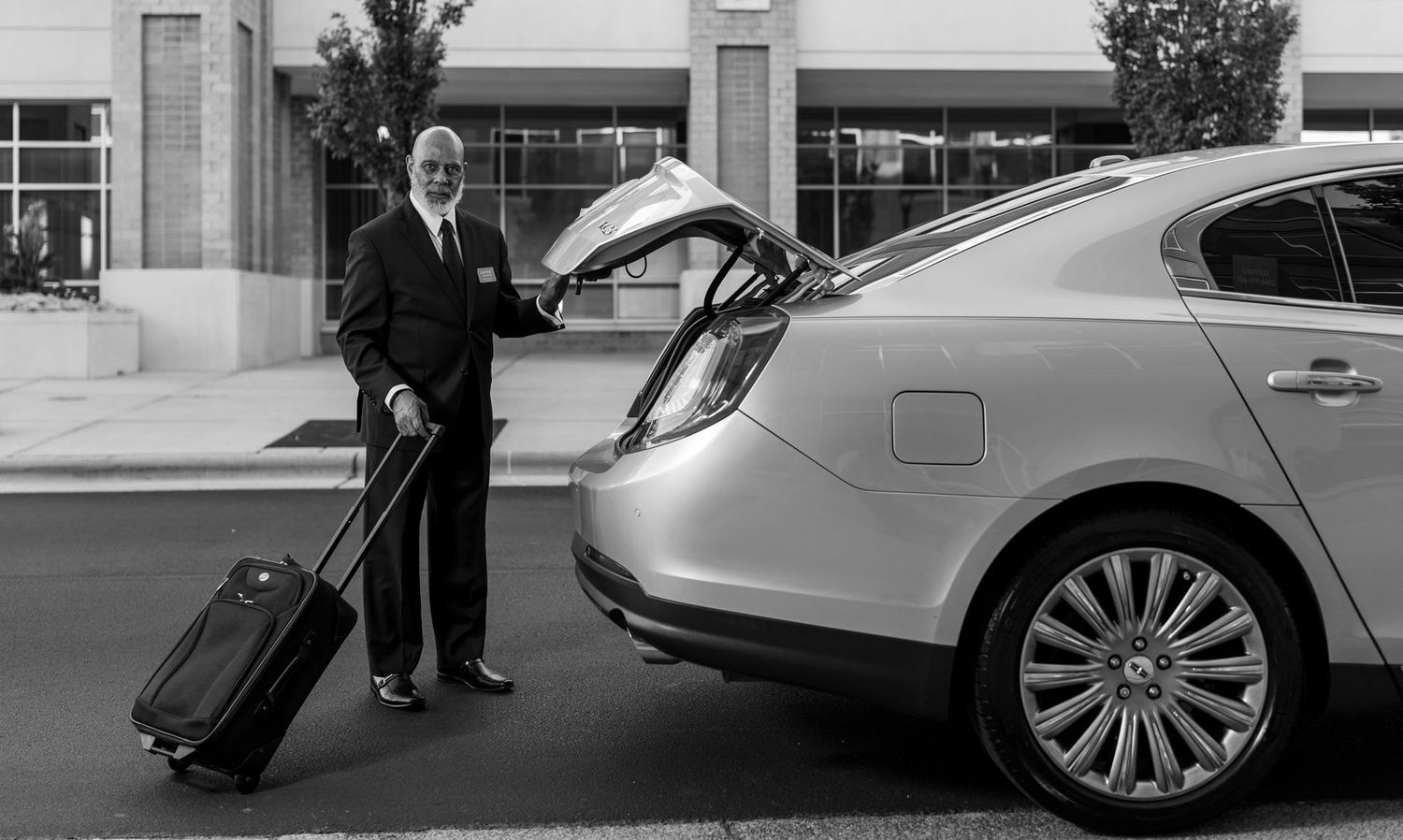
- Three passengers with full luggage: book an SUV, not a saloon.
- Four to six passengers with luggage: SUV or executive van.
- Seven or more, or a delegation on one flight: quote it as a single movement rather than several bookings that arrive separately.
- Golf clubs, skis, instruments or production equipment: tell us specifically. They change the vehicle class outright.
Connecting to private aviation
A commercial arrival at JFK connecting to a private departure is a cross-region road move, not an airport transfer. The New York area’s business-aviation traffic is spread across several fields, and they are in genuinely different places.
- Teterboro (TEB) — New Jersey, the primary business-aviation gateway for Manhattan. From JFK this crosses the entire city.
- Westchester County (HPN) — north of the city, convenient for Connecticut and Westchester destinations.
- Republic (FRG) — Long Island, considerably closer to JFK and the natural choice for Hamptons traffic.
- Morristown (MMU) — further into New Jersey, used heavily by corporate flight departments.
For these we work from the tail number rather than a flight number and coordinate with the FBO directly, so an aircraft released early does not depend on a passenger relaying the message. Our private aviation service covers how that handover works in detail.
Booking a JFK transfer properly
Everything above reduces to about six pieces of information. Give us these and the transfer is essentially solved before you board.
- The flight number, so we track it and re-time the pickup automatically.
- The terminal, because JFK has no central hall.
- The number of passengers and checked bags, separately.
- Whether you want the arrivals hall meet (included) or something closer to the aircraft.
- The exact destination address, not the district.
- Anything unusual: child seats, mobility assistance, oversized items, or an onward private departure.
For a single journey the online reservation form prices it live and confirms in under a minute. For anything with several vehicles or several arrivals in it, talk to the desk and we will build the manifest before quoting.
Frequently asked
Can my driver meet me inside the JFK terminal?
Yes, and it is included at no extra charge. Your chauffeur parks in the terminal car park and waits in the arrivals hall past customs with a name board. Because JFK has no central arrivals area, this is considerably more reliable than a kerbside pickup, where enforcement keeps vehicles moving.
How much waiting time is included at JFK?
Sixty minutes on international arrivals and thirty on domestic, timed from actual landing rather than the scheduled arrival time. Given how variable immigration and baggage are at JFK, timing from actual landing is the only measure that reflects what really happens.
How long does JFK to Manhattan take?
Realistically forty-five to fifty-five minutes in light traffic and seventy-five minutes to two hours at peak. It is roughly fifteen miles, but the Van Wyck Expressway is heavily congested for much of the day. We quote a fixed rate, so a slow run does not change your price.
What if my flight is delayed or lands early?
Nothing, from your side. We track the inbound flight and move the pickup time automatically in both directions. You are not charged for a delay that was not yours, and an early landing does not mean waiting for a driver who left on the original schedule.
Which vehicle do I need for three people and three suitcases?
An SUV. A luxury saloon seats three comfortably but cannot take three large checked cases as well. Booking to the passenger count and forgetting the bag count is the most common cause of a failed JFK arrival, and it is entirely avoidable by telling us both numbers.
Do you cover Teterboro and the other private-aviation fields?
Yes. Teterboro, Westchester County, Republic and Morristown are all covered, and we work from the tail number rather than a flight number, coordinating with your FBO or flight department directly. A JFK arrival connecting to a private departure is booked as one journey on one account.
Related on this site
Sources and further reading
- JFK Airport official site — Terminal maps, ground transportation rules and live airport notices.
- Port Authority of New York and New Jersey — The operating authority for JFK, LaGuardia, Newark and Teterboro.
- CBP Global Entry — The trusted-traveller programme that most reduces time in the immigration hall.
- OurAirports open data — The public-domain dataset behind our airport coverage listings.